
Density is the whole idea.
Ordinary charcoal is a piece of wood with the water and volatiles cooked out — light, porous, quick to go. CHARBLOX starts as sawdust from whole-lumber milling, pressed under heat until it is far denser than any branch, then carbonized. Same carbon. Far more of it per cubic inch. That is where the hours come from.
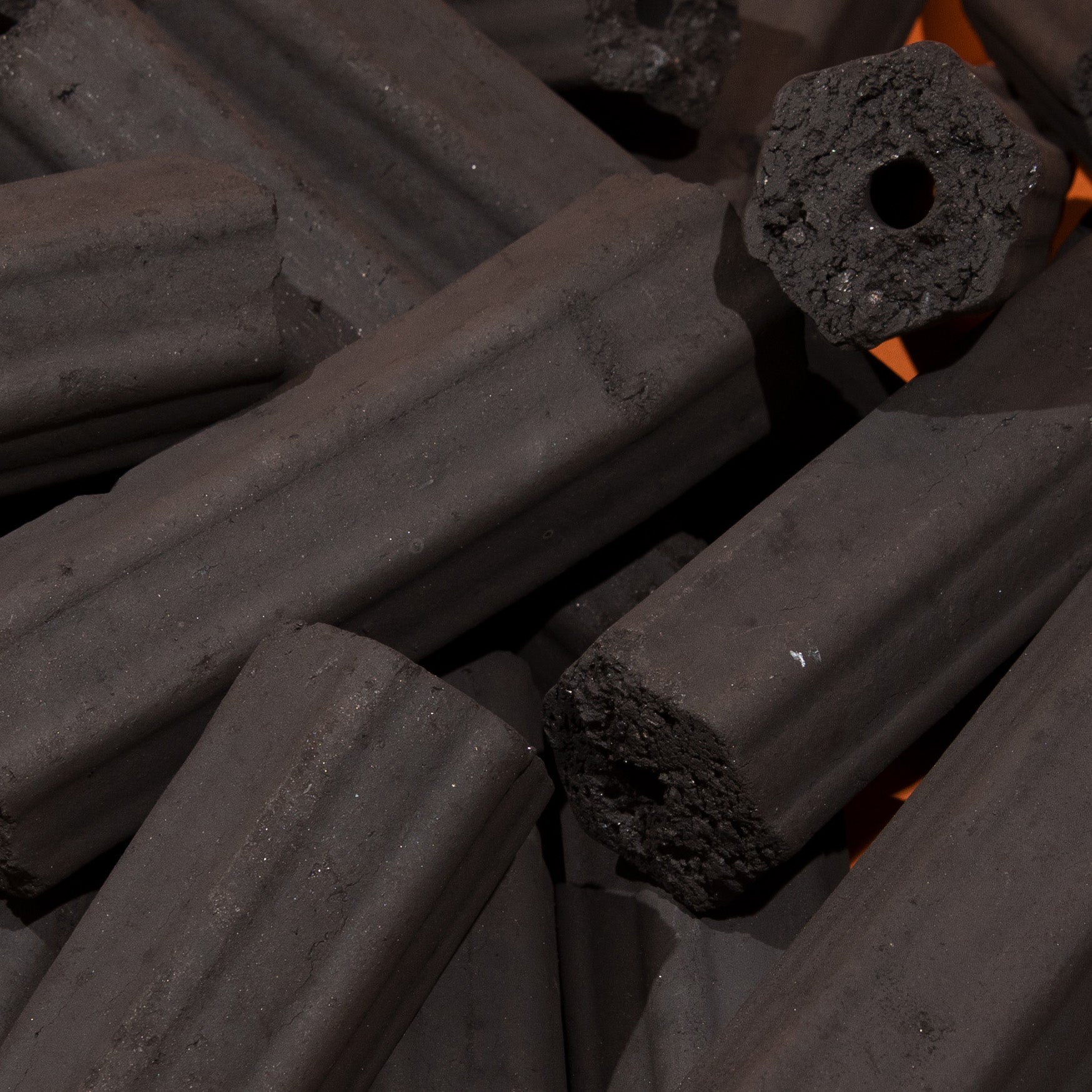
The shape is not decoration.
Per pound, in use.
Cost-per-pound figures are typical US retail ranges as of 2026; CHARBLOX range reflects 5 lb to 20 lb retail pricing. Cost per service, not per pound, is the number that matters — see the load planner on the home page.
Run it like equipment.
Dense fuel lights differently. Give it the chimney and a few extra minutes; it pays you back for hours.
Never fluid. Don't overcrowd the chimney — airflow is what gets dense logs going. Start before prep.
Longer than lump. Wait until the top logs are ashed at the edges before you dump the chimney.
Stack tight for an even bed. Set your temperature at the vents, then leave the bag alone.
Shut the vents or move coals to an airtight can. What's left is the first load next time — count it in your fuel cost.
No tree is cut.
Every log began as sawdust from whole-lumber milling — a by-product that would otherwise be waste. We press it, carbonize it and ship it from Los Angeles. No chemicals, no binders, no accelerants, and nothing felled to make it. Count what your kitchen saves in the Sawdust Ledger →
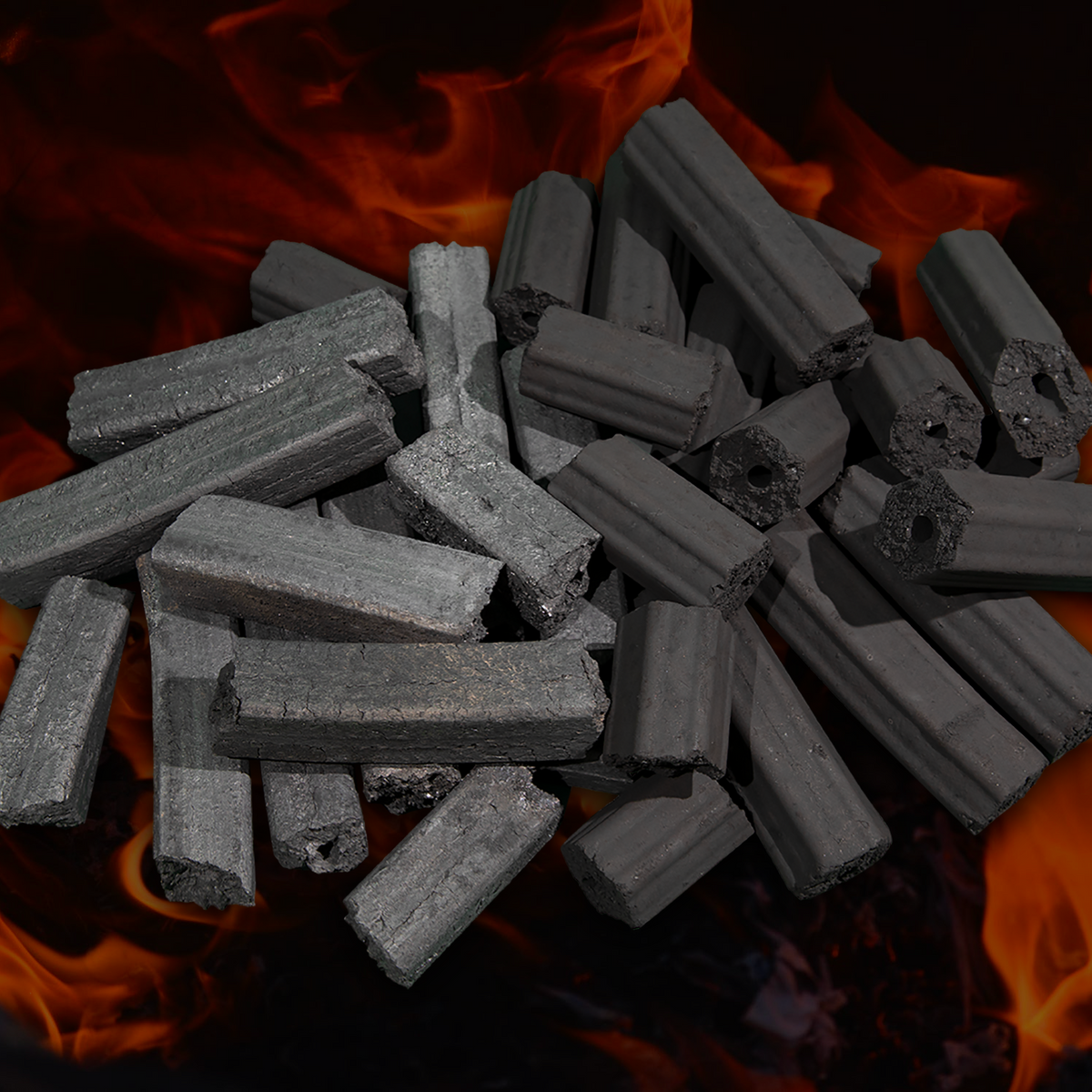
Carbon you could bury.
The carbon in every CHARBLOX log meets biochar-grade specs: more than 90% carbon, with a hydrogen-to-carbon ratio of 0.27.
Almost pure carbon. Fewer volatiles left to smoke, which is why it burns clean once lit.
The standard test of how stable carbon is. Biochar guidelines look for an H:C ratio below 0.7. The lower it is, the longer the carbon lasts.
Only recycled hardwood or bamboo sawdust goes in, so only clean carbon comes out.
The sawdust is pressed into logs, then carbonized by pyrolysis: heated in a low-oxygen chamber so it turns to carbon instead of burning. The wood’s water and volatile gases are driven off and a dense, stable carbon skeleton stays behind.
Pyrolysis leaves a highly porous carbon, full of micro- and macro-sized pores. In soil, those pores hold water, nutrients and beneficial microbes. Carbon this stable can stay locked in soil or building materials for hundreds of years instead of returning to the air.
Specs: carbon content and H:C ratio of CHARBLOX carbon. Carbon is stored long-term only when the char goes into soil or materials, not when it’s burned as fuel. For biochar or bulk carbon inquiries, contact us.